October 2025 until October 2027
The exact locations of the picture banks can be found on the map on the exhibition page.
If you have any questions, please contact the Tourist Information Dessau.
Downtown
Open Space Gallery
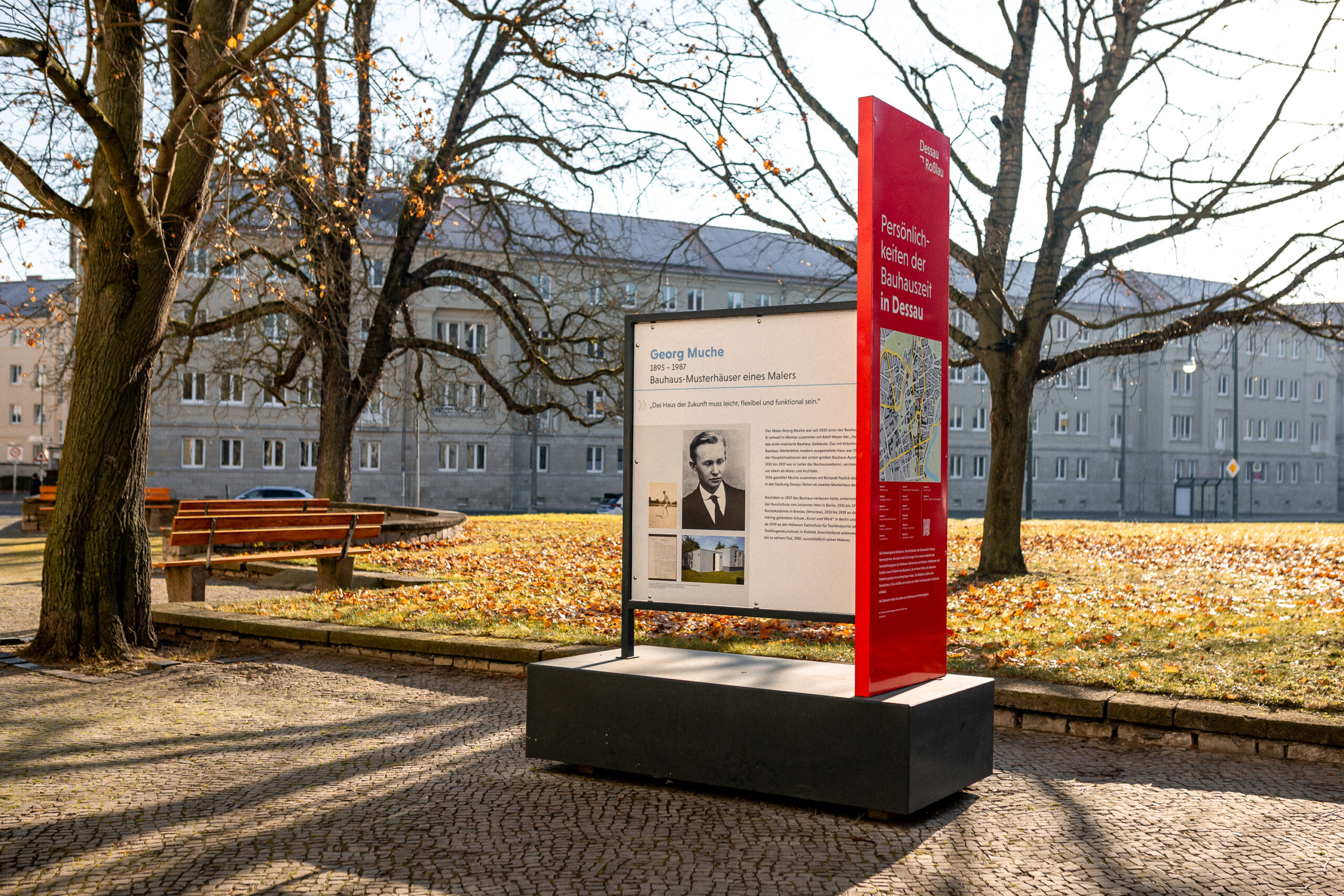
Take your time for a walk through the city and discover the most beautiful places of Dessau-Roßlau as photo impressions on an approximately 3.5 km long circuit between the train station and Kavalierstraße.
In this interesting format, the temporary exhibition presents appealing topics such as urban development, urban history and urban culture.
The current open space exhibition invites you to get to know personalities from the Bauhaus era in Dessau. On the tour you will meet directors, masters, students and supporters of the Bauhaus, whose work has shaped and carried forward the ideas of modernism.
The picture benches tell their story in text and images and make the diversity of the Bauhaus period in the urban space tangible.
Click here to go to the exhibition page.
29.08. – 30.11.2027
daily 10.00 a. m. – 6.00 p. m., closed on Tuesdays
Anhalt Art Gallery
Puschkinallee 100
06846 Dessau-Roßlau
Anhalt Art Gallery
Anhalt Art Gallery
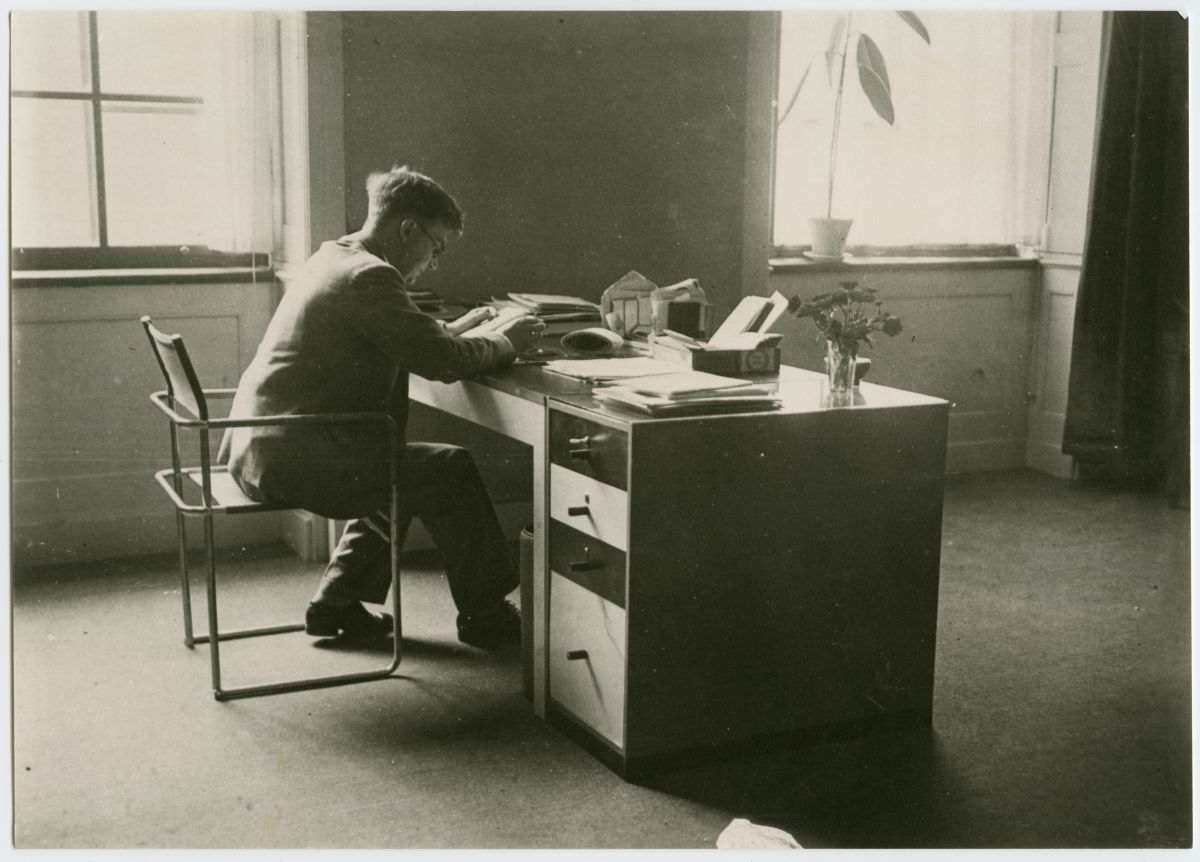
Conservator and modernist. Ludwig Grote and the Dessau Bauhaus
Ludwig Grote (1893–1974) was a leading figure in the cultural life of Anhalt during the Weimar Republic. From 1924, as State Conservator, he was the chief custodian of historic monuments and, as Art Curator of the Anhalt Art Association, was simultaneously responsible for the promotion of contemporary
art. In 1925, he brought the Bauhaus from Weimar to Dessau, and in 1927 he became Director of the newly founded Anhalt Art Gallery.
The exhibition explores his life through a significant collection of objects: in 1927, Grote had his official residence fitted out by the Bauhaus. Hinnerk Scheper designed not only the flat but also the walls of the exhibition rooms in the Gemäldegalerie. Marcel Breuer designed furniture which was placed in the flat of the newly appointed director and husband. Among the pieces of furniture brought back to Dessau for the exhibition, the desk stands out in particular – the one at which Grote was photographed in a picture that has since become iconic.
Works by Paul Klee, Wassily Kandinsky, Lyonel Feininger, László Moholy-Nagy and Fritz Winter – which Grote acquired for himself and for his museum, and some of which bear personal dedications to him – are on display in the exhibition, illustrating his close ties to the Bauhaus artists and his significance in promoting their art.
The exhibition forms part of the ‘100 Years of the Bauhaus Dessau’ anniversary celebrations and also marks the start of the year-long celebrations to mark the 100th anniversary of the Anhalt Art Gallery, which will continue in 2027 with further events.
14.06.2026 – 29.11.2026
We – Sun 10.00 a.m. – 05.00 p.m.
City History Museum
Schlossplatz 3A
06844 Dessau-Roßlau
City History Museum
Schlossplatz 3A
06844 Dessau-Roßlau
City History Museum
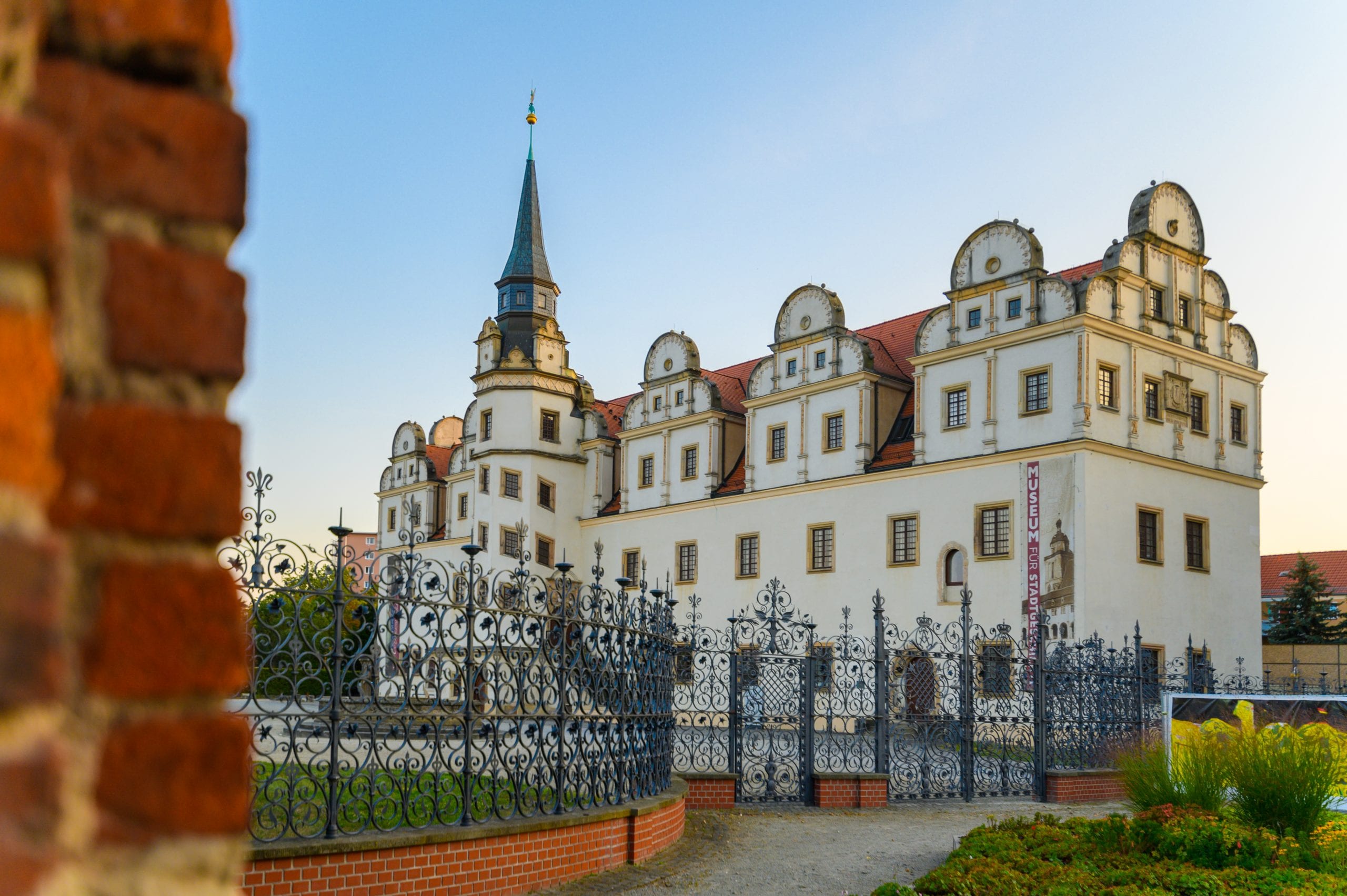
The Bauhaus Comes to Town – Dessau in the 1920s
To mark the Bauhaus centenary in Dessau, the Dessau Museum of City History invites visitors on an exciting journey back in time. The special exhibition reveals the city that the Bauhaus members encountered in 1925–26: a Dessau in transition, shaped by the aftermath of World War I, political upheaval, and economic challenges.
Despite limited funds, cultural figures, politicians, and industrialists embraced new ideas. They pinned high hopes on the Bauhaus, envisioning a modern image for the city and solutions to pressing issues such as housing construction. Yet this new beginning was not without controversy; critical voices also accompanied the new “School of Design.”
Original artifacts—drawn primarily from the museum’s own collection—shed light on life in 1920s Dessau. They tell stories of urban development, political debates, and cultural impulses. The exhibition also guides visitors to the locations across the city where the Bauhaus members lived and worked.
Complementing the special exhibition, the permanent exhibition offers further insights into the 1920s. Highlights include the innovative “propeller furniture” from the Junkers model workshop.
Experience a compelling history that continues to inspire today. On June 14, Rainer Höhling of the German Ido Society will launch the exhibition’s accompanying program with a lecture titled “The Constructed Language Ido as a Testament to the Cosmopolitan Atmosphere of 1920s Dessau.”
12.08. – 30.11.2026
Wed – Sun 10.00 a.m. – 5.00 p.m.
Entrance fee: 4,50 €
Museum of Natural and Prehistory
Askanische Straße 32, 06842 Dessau-Roßlau
Museum of Natural and Prehistory
Askanische Straße 32, 06846 Dessau-Roßlau
Museum of Natural and Prehistory
Animals in the Northern Lights
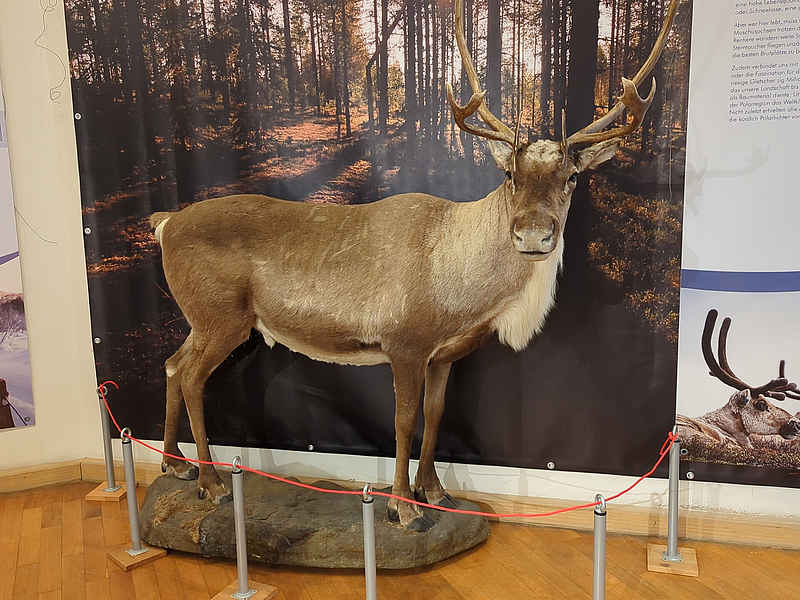
Snowfields and glaciers dominate the landscape in the far north and the Antarctic south, even in summer – and yet there is a comparatively rich variety of wildlife there. This is the focus of the new special exhibition ‘Animals in the Northern Lights’, curated by the Potsdam Natural History Museum, which will open at the Dessau Natural History Museum on 9 August 2026 at 3 pm.
From the majestic reindeer and the beautiful snowy owl to the arctic fox and the legendary wolverine, the exhibition showcases fascinating animals and their unique characteristics. The highlight of the exhibition is a fully-grown musk ox, whose shaggy coat protects it from even the lowest temperatures of the polar night. A section of the exhibition, featuring items on loan from the Federal Environment Agency and objects from the collection of the Dessau Museum of Natural and Prehistory, is dedicated to current issues relating to ice and snow in the polar regions.
05 Sep 2026 – 29 Mar 2027
Mon – Sun, 10 am – 5 pm (Mar – Oct)
Tue – Sun, 10 am – 5 pm (Nov – Feb)
Bauhaus museum
Mies-van-der-Rohe-Platz 1
06844 Dessau-Roßlau
Stiftung Bauhaus Dessau
Gropiusallee 38
06846 Dessau-Roßlau
Bauhaus Museum
Gong I Strike I Whistle
Astrup & Bordorff
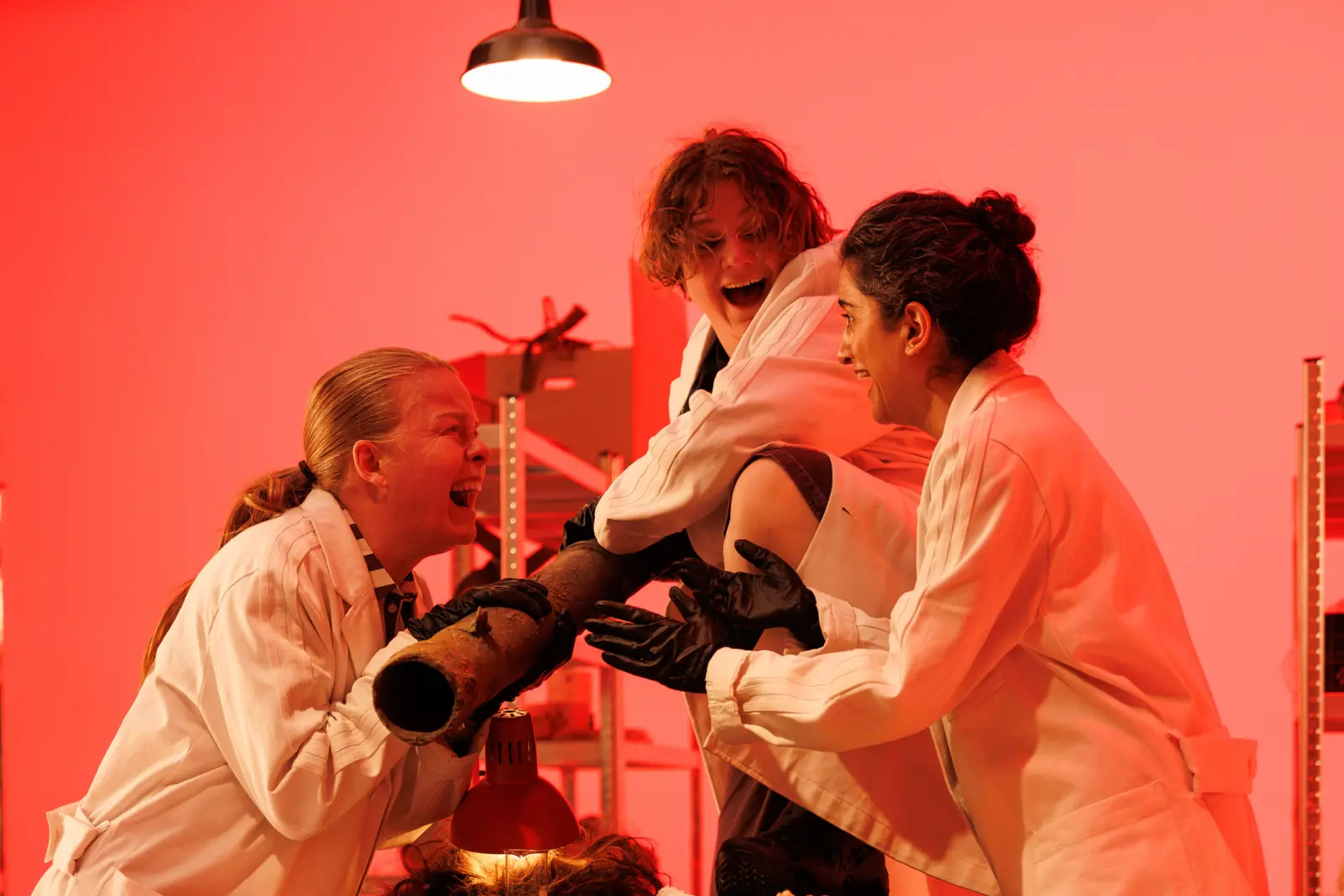
For *Gong | Schlag | Pfiff*, the first German solo exhibition by the Danish artists Astrup & Bordorff, the duo created a new film in collaboration with the Bauhaus Dessau Foundation.
The narrative takes its starting point in archaeological excavations conducted in 2007 at the Bauhaus Masters’ Houses in Dessau. Among the unearthed artifacts—which are now preserved in the Bauhaus Dessau Foundation’s Building Research Archive—are historic drainpipes, some of which can only be tentatively attributed to specific houses. In the film, this archival uncertainty serves as the impetus to explore the relationship between desire and historiography: In search of traces of a possible fifth Master House and its forgotten female residents, a small team of female scholars finds itself caught in an emotionally charged maelstrom of professional ambition, shared fascination, and queer desire.
In the “Raumbühne” at the Bauhaus Museum Dessau, the expansive installation “Pipe Dreamer” extends the film’s narrative into the exhibition space. The monumentally enlarged replica of a drainpipe reflects the film’s exploration of how historical meaning is selectively constructed through perspective and proportion. The exhibition’s scenography creates a stage-like setting for the film and the installation. An abstract composition drawn from the architectural forms and colors of the Dessau Masters’ Houses alludes to the use of architectural models from the Bauhaus Dessau Foundation in *Drainpipe Dreams* and underscores the meaning-shifting effect of scaling.
28 Mar 2026 – 10 Jan 2027
Mon – Sun, 10 am – 5 pm (Mar – Oct)
Tue – Sun, 10 am – 5 pm (Nov – Feb)
Bauhaus Building
Gropiusallee 38
06846 Dessau-Roßlau
Stiftung Bauhaus Dessau
Gropiusallee 38
06846 Dessau-Roßlau
Bauhaus Building
Glass I Concrete I Metal
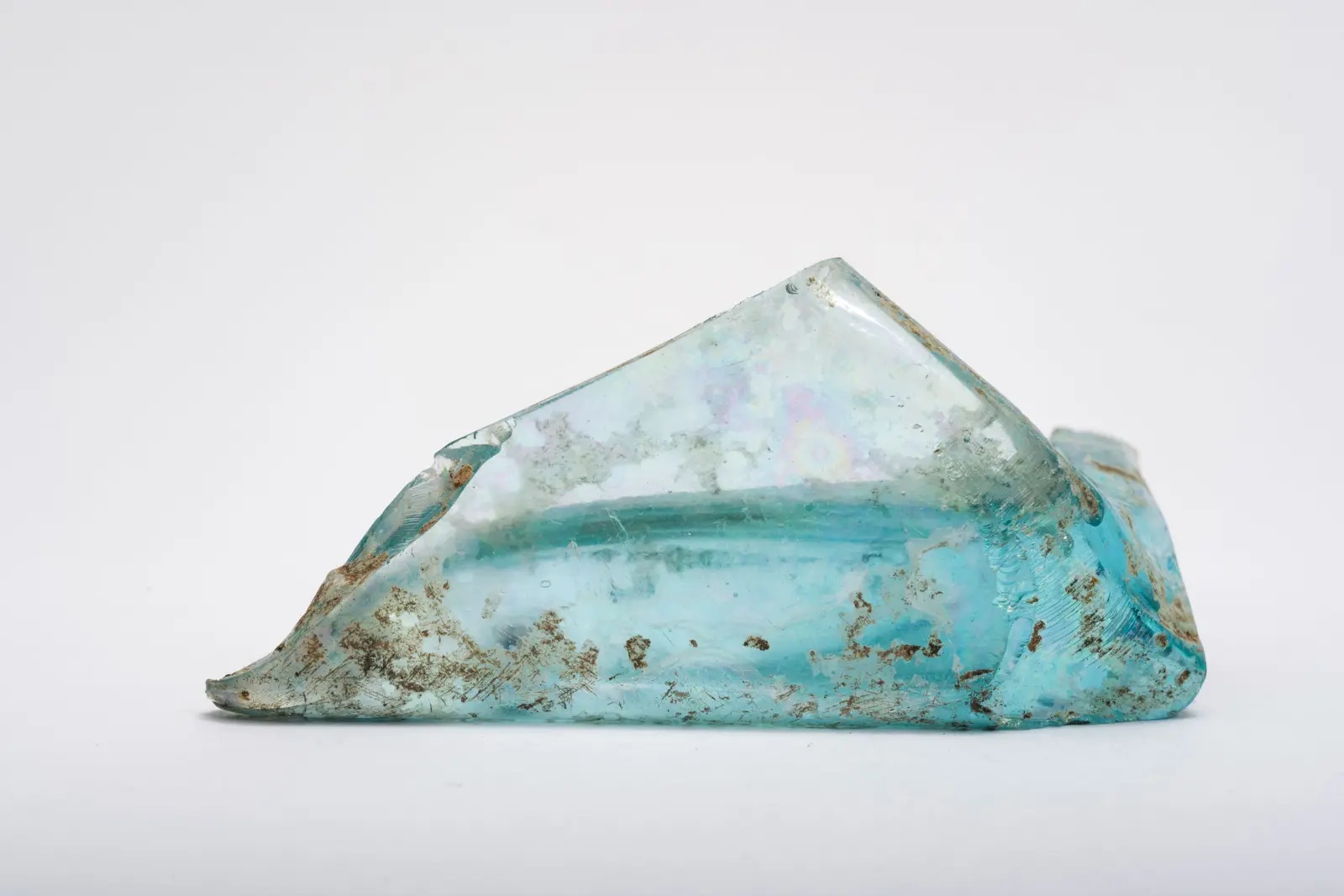
Walter Gropius once called iron, concrete and glass the new industrial materials that would “supersede” the old natural ones. The Bauhaus Building itself is a testament to numerous material innovations that emerged in industry and in the construction sector of the 1920s. This three-part exhibition is dedicated to the materials the building is mainly made of and with which Bauhauslers experimented in the Bauhaus workshops.
When the Workshop Wing of the Bauhaus Building opened in Dessau on 4 December 1926, it radiated like a glass cube – an architectural manifestation of Neues Bauen (New Building). The fascination but also scepticism of more than a thousand visitors resulted not only from the unusual, windmill-like ground plan but also from the innovative building materials used by Walter Gropius and explored in the designs by the school’s’ workshops.
Nearly a century later, the exhibition Glass | Concrete | Metal in the historical Workshop Wing looks at precisely these materials. It examines the close ties of work at the Bauhaus to the industrial history of the early twentieth century and asks about the often-overlooked material, economic, and technological foundations of the iconic Bauhaus Building and its workshop production.
28 Mar 2026 – 27 Sep 2026
Former Zeeck department store
Kavalierstraße 72
06844 Dessau-Roßlau
Stiftung Bauhaus Dessau
Gropiusallee 38
06846 Dessau-Roßlau
Former Zeeck department store
Algae I Debris / CO2
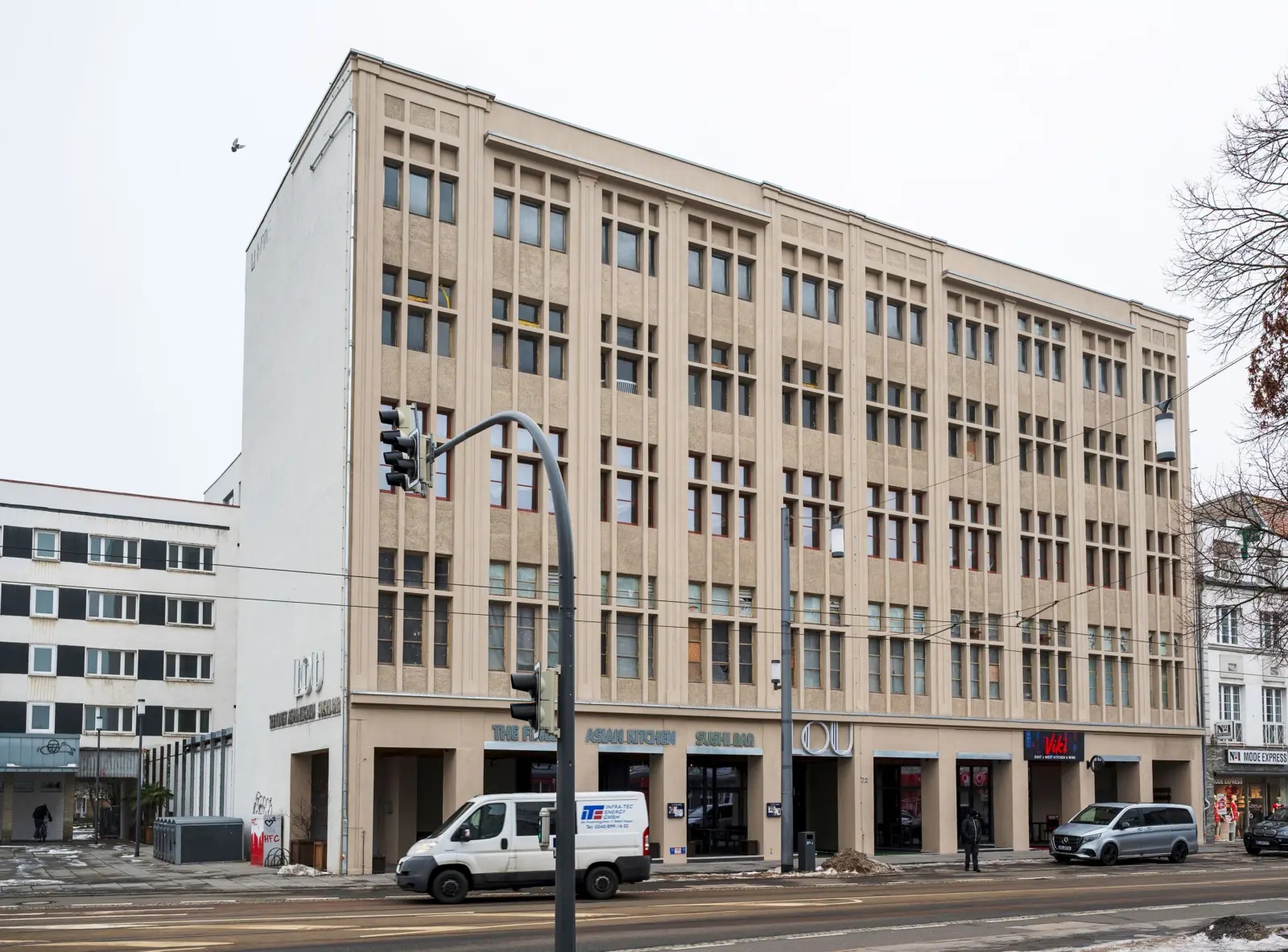
The former Zeeck department store in downtown Dessau is the point of departure for the exhibition Algae | Debris | CO2. Opened in 1908 and expanded in the 1920, the building is an outstanding example of modernist department-store architecture, and its material layers tell a story of the city lasting more than a century.
The exhibition makes this history visible: Within the framework of the exhibition, so-called time windows at the stairs, floors, pillars, and ceiling provide views of the material history of the building. What seems unchanged at first glance reveals on closer inspection a sensitive approach to the historical building fabric. Flaking plaster is removed, holes are filled, whatever can be repaired is repaired or renovated – for example, old windowpanes or the panels of the Hetaflex aluminium façade, which were removed when the façade was renovated in the spring of 2025. Additions such as the ceiling lighting system and repairs of the floor covering in the 1980s follow the principles of reusability.
28 Mar 2026 – 27 Sep 2026
Open Air Presentation
Interior spaces not open to the public.
Historic Employment Office
August-Bebel-Platz 16
06842 Dessau-Roßlau
Stiftung Bauhaus Dessau
Gropiusallee 38
06846 Dessau-Roßlau
Historic Employment Office
Bricks I Roof I Power
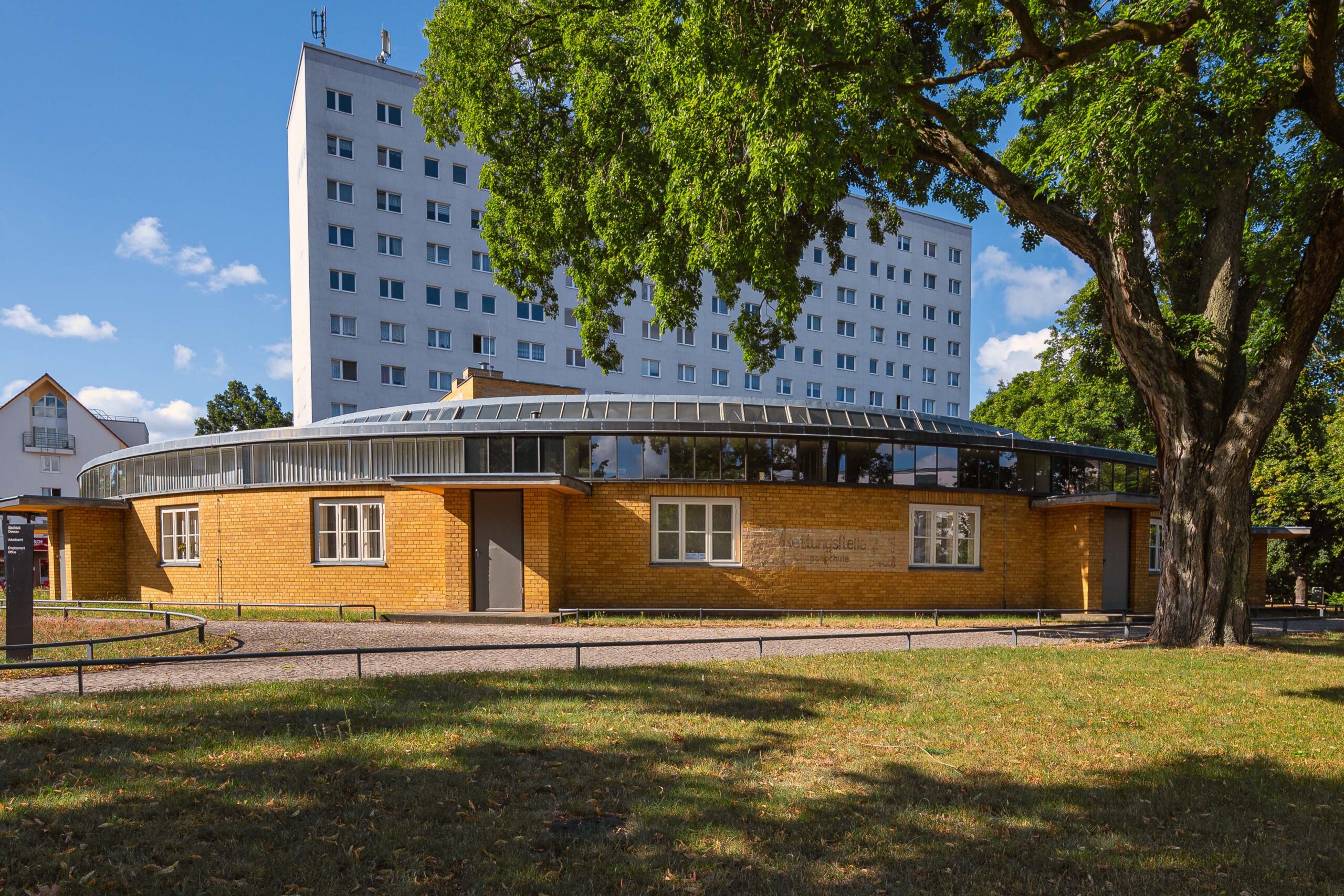
The Employment Office in Dessau, built in 1928–1929 based on designs by Walter Gropius’ office, is considered an important example of functionalist modern architecture. With its yellow brick façade, the building contrasts with the radiantly white Bauhaus buildings and forms a tie to the materials of the Fagus factory, which Gropius designed with Adolf Meyer (1911). The origin of the yellow bricks has yet to be determined.
The area around the historical Employment Office is turned into a performance space – redefined by us as an “Office of New Work”. In addition to the more prominent materials of modernity – such as steel, glass and concrete – a material comes to the forefront which is ever-present but often overlooked: brick. In “Bricks | Roof | Power”, brick, among other things, becomes the starting point for the installation “Superbricks – Pink Elements” by the Copenhagen artist group SUPERFLEX. Part of the performative programme is the production of special bricks in the “Superbrick Factory”. Numerous events, performances, guided tours, workshops, day excursions and a colloquium are part of the programme.
28 Mar 2026 – 28 Feb 2027
open air presentation
Steel House
Südstraße 5
06849 Dessau-Roßlau
Stiftung Bauhaus Dessau
Gropiusallee 38
06846 Dessau-Roßlau
Steel House
Sheet I Membrane I Porthole
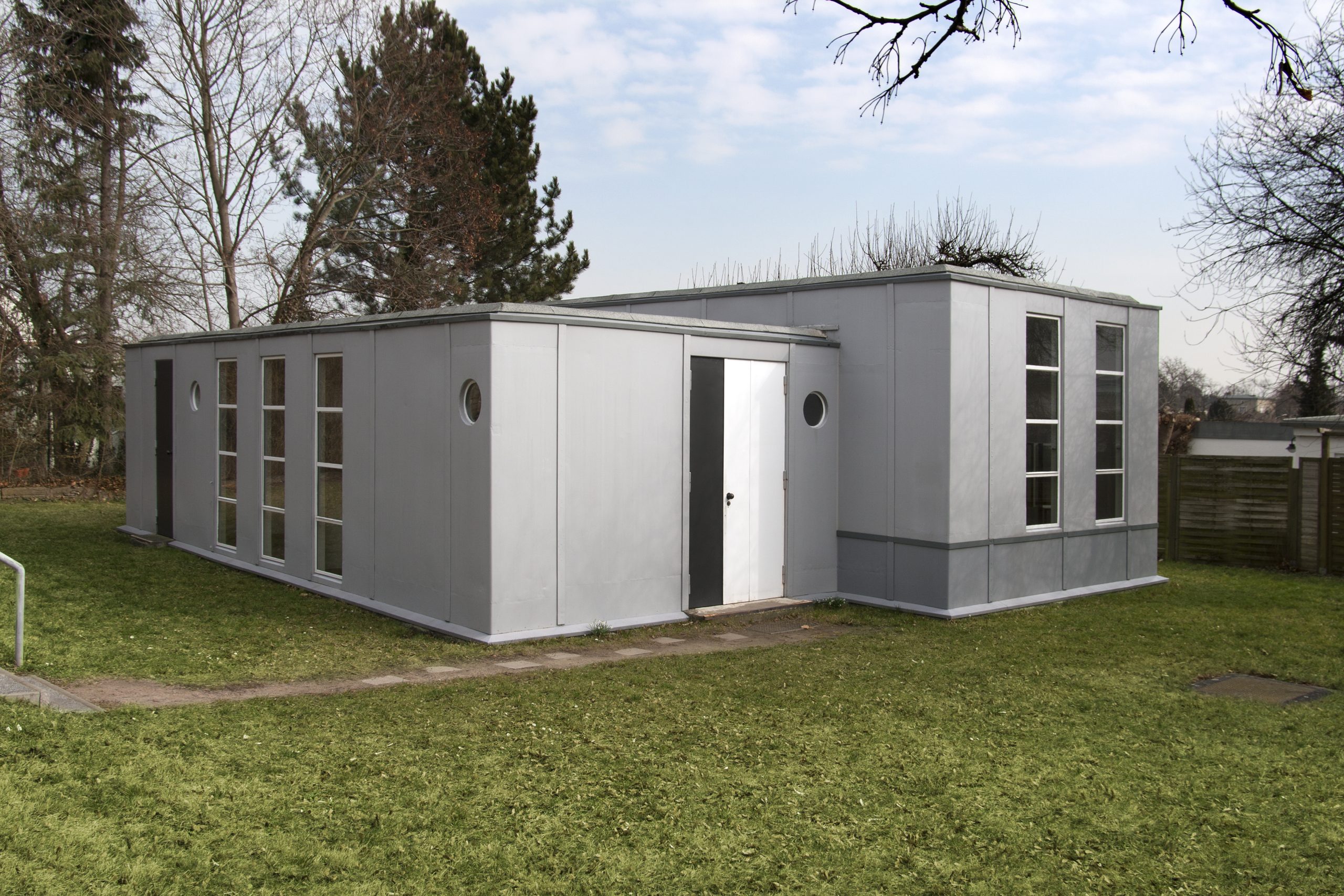
The presentation Sheet | Membrane | Porthole at the Steel House shows the example of the experimental building constructed primarily from sheet metal in 1926 in the Dessau-Törten Housing Estate. The Bauhaus master Georg Muche designed it with the architect Richard Paulick with support from the Carl Kästner steel-house factory in Leipzig. The uncompromisingly modern construction of custom profiles offered spatial modules that could be expanded flexibly. But their rust protection and insulation turned out to be inadequate. A renovation has restored the Steel House to its historical appearance.
The Steel House combines Bauhaus visions with their industrial implementation during an innovative construction boom. The presentation shows how Dessau became a centre of experiments with metal, which ended with the rearmament for war after 1933.
28 Mar 2026 – 28 Feb 2027
open air presentation
Junkers Lamellenhalle
Boathouse of the Junkers Paddling Club Dessau
Leopoldshafen 4
06846 Dessau-Roßlau
Stiftung Bauhaus Dessau
Gropiusallee 38
06846 Dessau-Roßlau
Junkers steel slat hall
Slats I Purlins I Knots
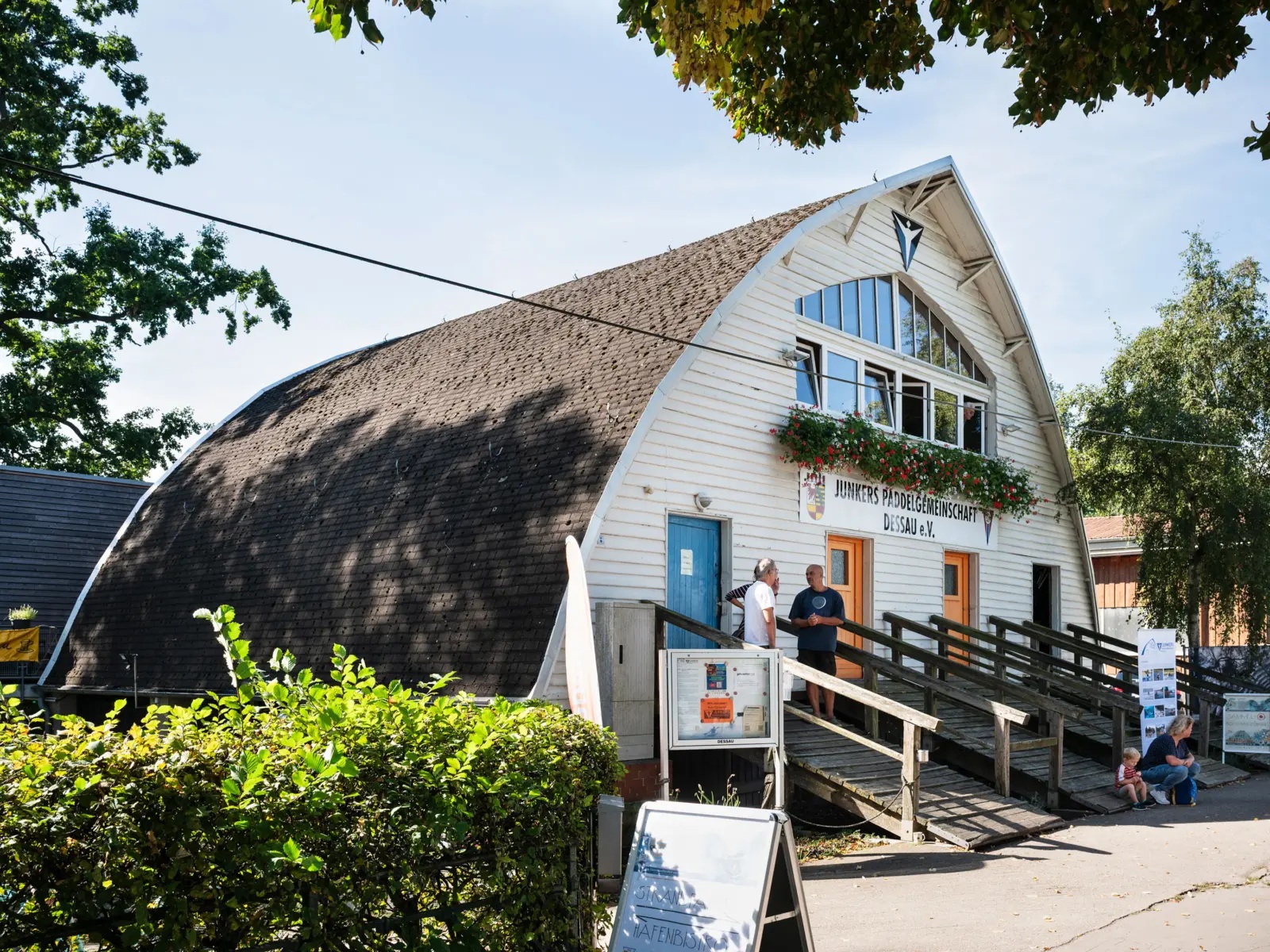
The Steel-Slat Hall in Dessau that is now used as a boathouse was built in 1930 and is one of the few surviving examples of the system patented by Hugo Junkers. Its characteristic curved steel roof is based on a modular construction system that was an international success because it used many prefabricated elements, was easy to transport and quick to assemble, and was made of robust materials.
The presentation Slats | Purlins | Knots shows this system using the concrete example of the steel-slat hall of the canoe club Junkers Paddelgemeinschaft Dessau e.V. and tells the story of its adventurous exporting: Beginning in 1926, the Junkers delivered a complete aircraft factory with eleven steel-slat halls, furnishings, machines, and know-how from Dessau to Kayseri in central Turkey.

05.12.2025 – 31.01.2027
Tue – Sun, 10 am – 6 pm (March – Oct)
Tue – Sun, 10 am – 5 pm (Nov – Feb)
Bauhaus Museum Dessau
Mies-van-der-Rohe-Platz 1
(at the Kavalierstraße)
06844 Dessau-Roßlau
Stiftung Bauhaus Dessau
Gropiusallee 38
06846 Dessau-Roßlau
Bauhaus Museum Dessau
Bakelite | Glaze | Colour
Since the Bauhaus Museum Dessau opened in 2019, more than 3,000 objects from over 150 donors have been added to the Bauhaus Dessau Foundation’s collection – ranging from art, design and everyday objects to photographs and elements from the building’s construction period, such as historic Bakelite light switches.
The exhibition presents a selection of these objects and shows how diverse the gifts are that enrich the collections of the Bauhaus Dessau Foundation in material, historical and narrative terms. The stories of the donors are also told: their personal motives and memories bear witness to their lively relationship with the Bauhaus in Dessau – both then and now.
permanent exhibition
Tue – Sun, 10 am – 5 pm (Nov – Feb)
Mon – Sun, 10 am – 5 pm (Mar – Oct)
Bauhaus Building
Gropiusallee 38
06846 Dessau-Roßlau
Exhibition in the Bauhaus Building
Yun Yang. More than real
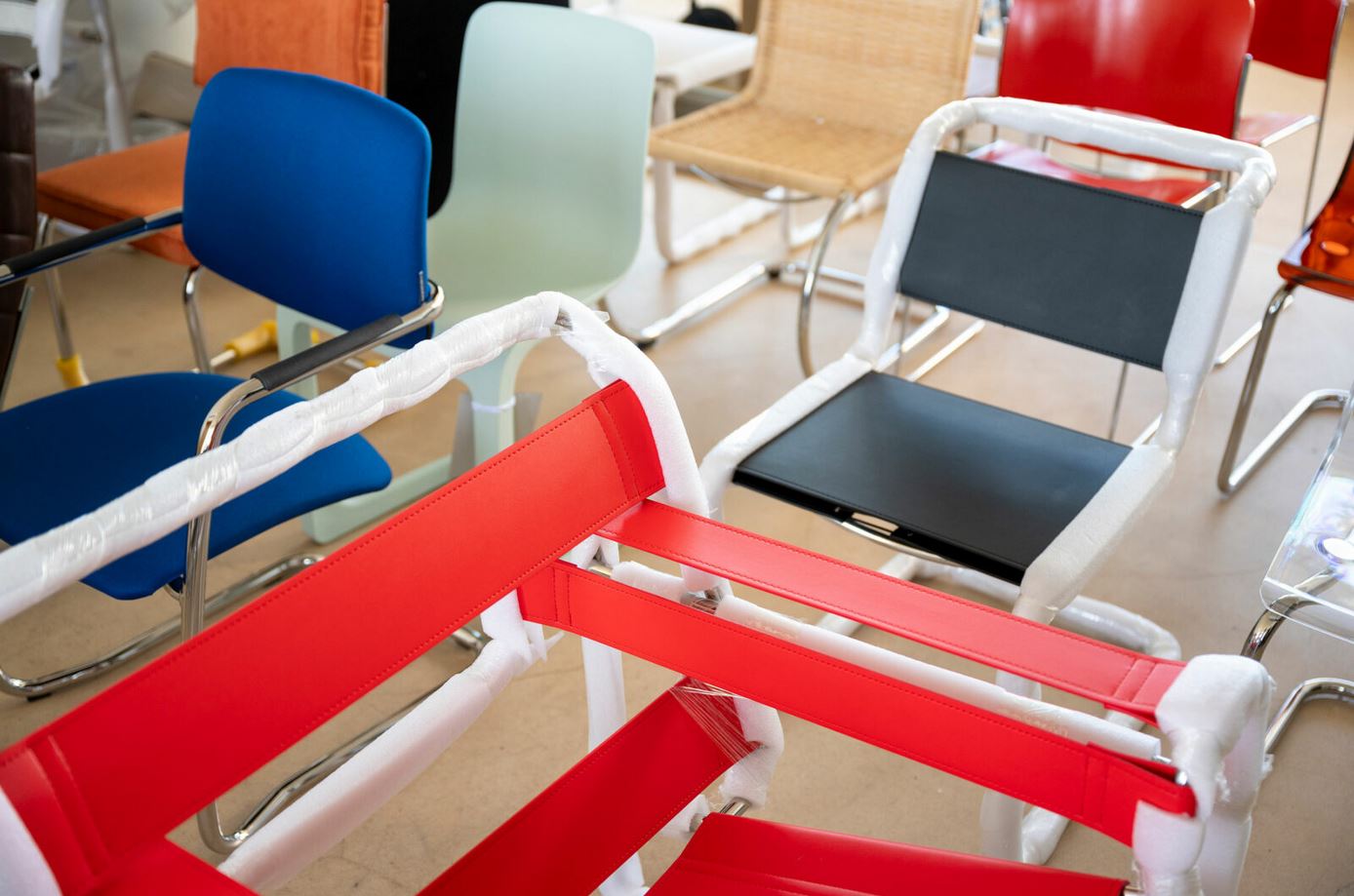
In his work More than real, Jun Yang presents famous Bauhaus furniture of various origins in the historic Bauhaus building. The Vienna-based artist uses various rooms with a precise selection of furniture produced true to the original, translations and free imitations. It addresses the further developments and changes that the design heritage of the Bauhaus, specifically furniture design, has undergone over the past decades. Jun Yang’s work for the Bauhaus Dessau is about interpretations and transfers: from industrial furniture to design icons, to fetishes, to copies and to works of art. With the selection of furniture, Jun Yang rejects a strict concept of authenticity and at the same time invites people to continually renegotiate ideas of authenticity. What is authentic that needs to be preserved?
On the occasion of the centenary of the Bauhaus in Dessau, Tecta and Jun Yang are starting the experiment of developing a new, completely recyclable Wassily edition. The name “Wassily” was introduced in the 1960s by Dino Gavina as a marketing name for the Breuer B3 armchair. Tecta produces the foldable armchair under the name D4.
permanent exhibition
Tue – Sun, 10 am – 5 pm (Nov – Feb)
Mon – Sun, 10 am – 5 pm (Mar – Oct)
Bauhaus Building
Gropiusallee 38
06846 Dessau-Roßlau
Exhibition in the Bauhaus Building
The glass facade at the Bauhaus
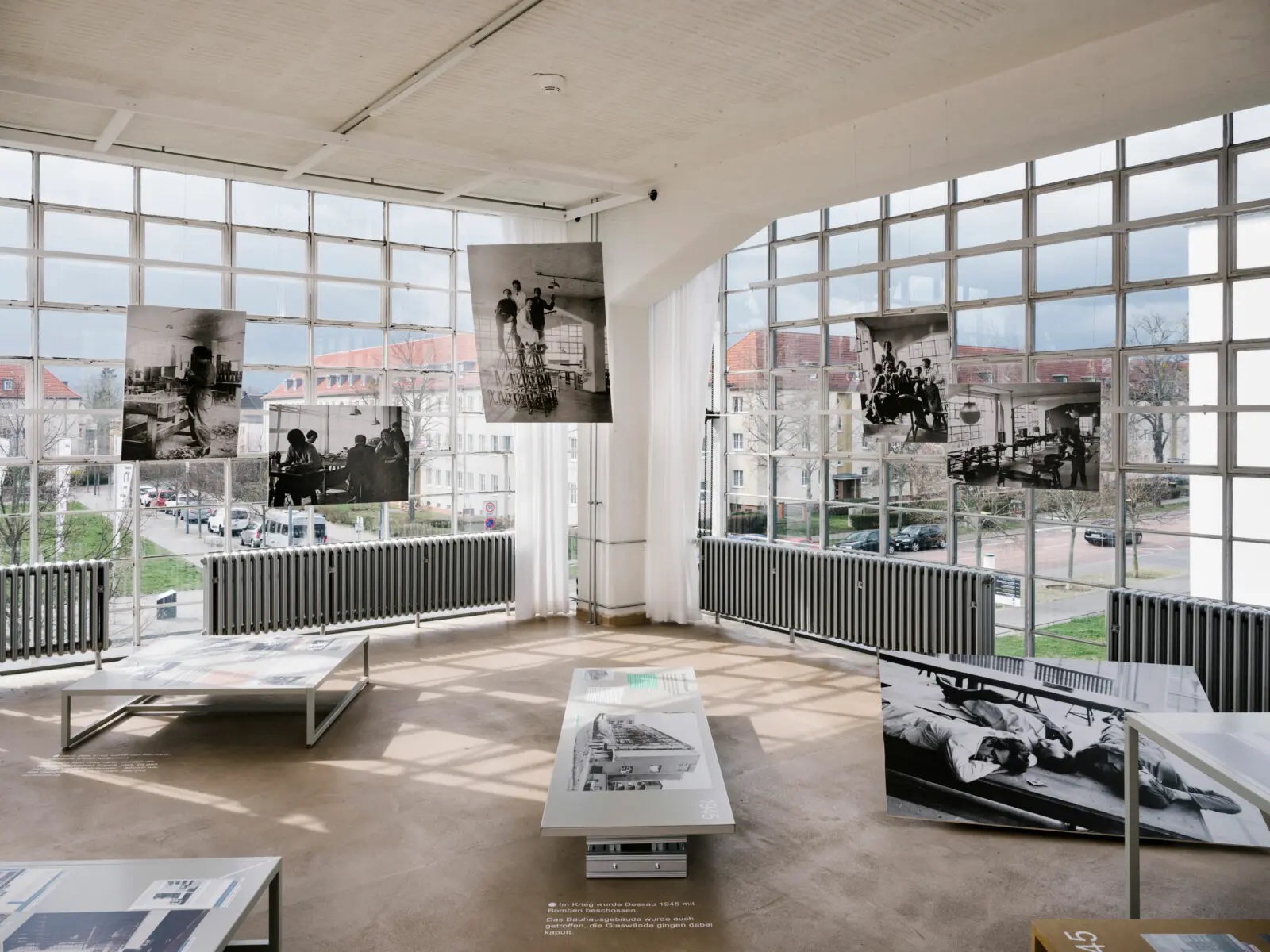
The striking steel and glass facade of the workshop wing was a novelty when it was completed in 1926 and for a long time stood for modern building. Since its destruction due to the war in 1945, there have been repeated changes to the building. One of the most important was the reconstruction of the facade as an aluminum-glass construction in 1976. During this time, people learned to appreciate the Bauhaus again. It became (again) a place for design and architectural questions.
The exhibition traces the eventful history of the famous facade. Historical photographs show the interior and everyday life of the training center from the 1920s to the 1980s. Contemporary witnesses from different generations have their say in images and sounds.
permanent exhibition
Tue – Sun, 10 am – 5 pm (Nov – Feb)
Mon – Sun, 10 am – 5 pm (Mar – Oct)
Bauhaus Building
Gropiusallee 38
06846 Dessau-Roßlau
Exhibition in the Bauhaus Building
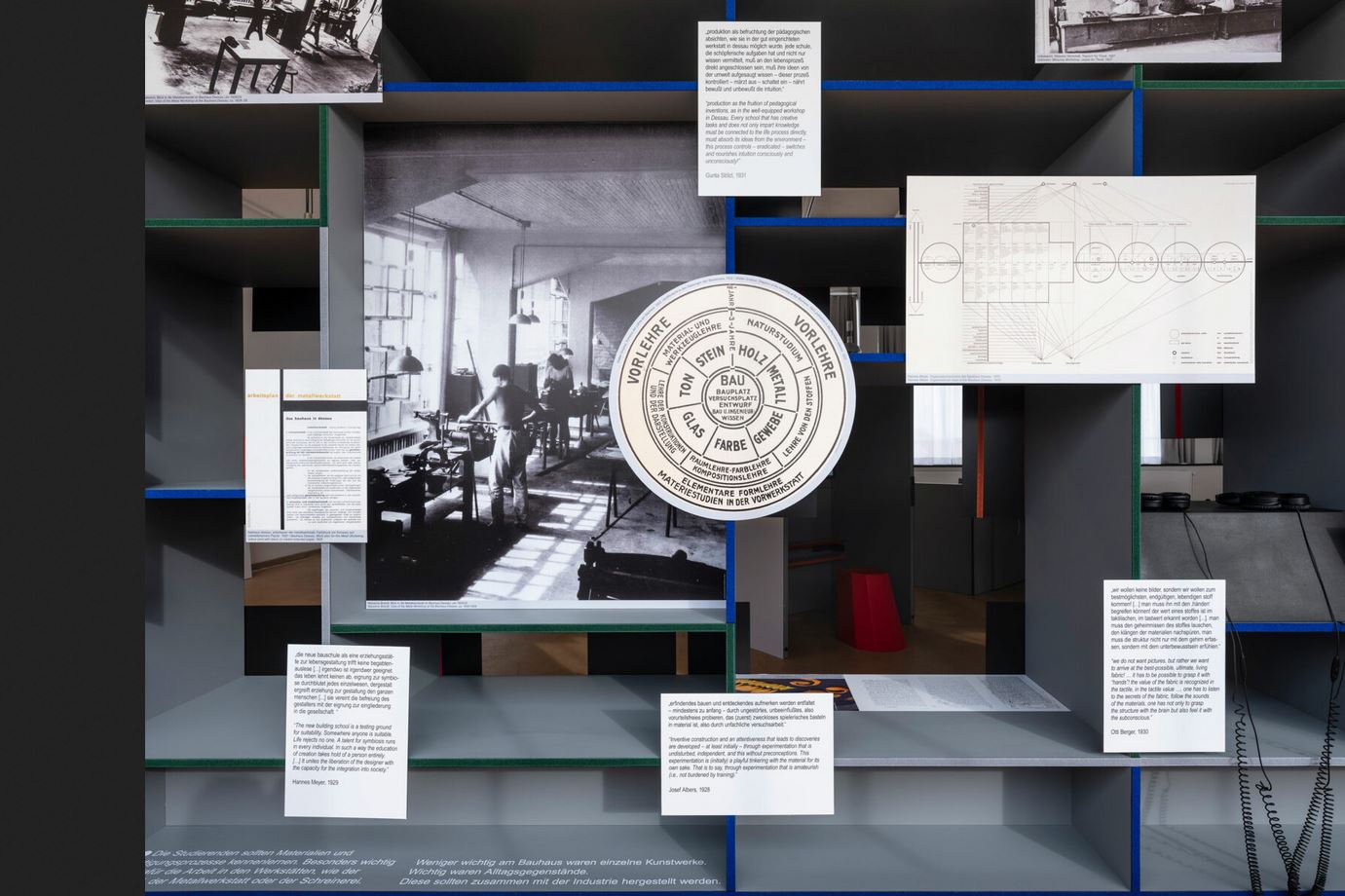
Bauhaus learning place
The former architecture classroom becomes an exhibition and place for visitors to stay with the “Bauhaus Learning Site”. Against the background and context of the historic Bauhaus Dessau as a school (1926–1932), current forms of learning that are practiced today in the two departments of the Academy and the Curatorial Workshop of the Bauhaus Dessau Foundation are presented here. This includes research and teaching on history and critical reflection of modern and current design discourses as well as mediation and playful-speculative reinterpretations of historical exercises, materials and ideas.
Using a selection of presented projects, visitors to this location are invited to take part in the multi-voiced conversations of these teaching programs, workshops, publications and other formats on the discourse and practice of design.